


Adobe Photoshop: Photo Editor
4.593.00 Reviews
App Specs
- Version
- 1.6.0.2299
- Updated On
- License
- Free
- Downloads
- 1,000,000+
- Developer
- Adobe
- Categories
- Photography
- Platform
- Android
Screenshots
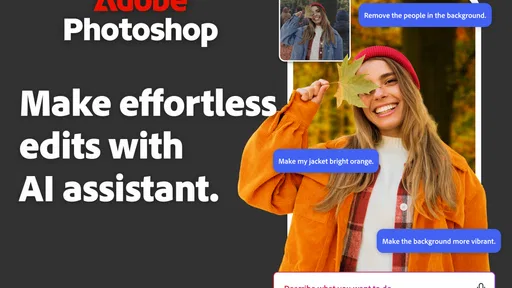
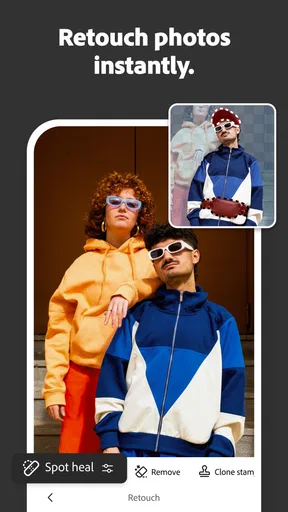
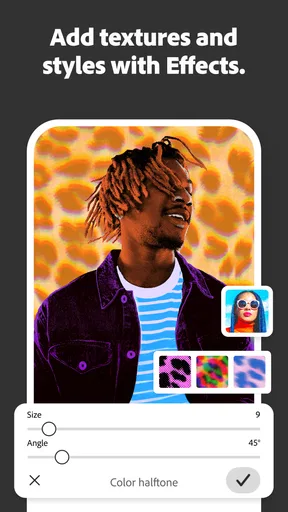
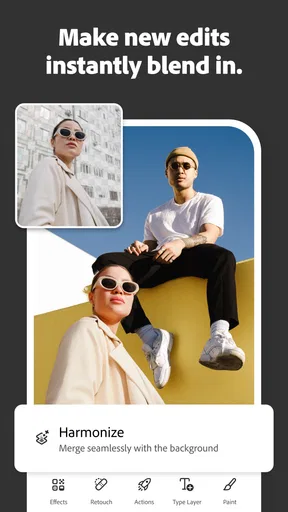

 Analysis by AppCompare
Hey there! So, I just spent some quality time with Adobe Photoshop: Photo Editor, and let me tell you, it’s quite the ride. Whether you're a seasoned pro or just someone who loves playing around with filters, this app has something for everyone. Let's dive into what makes this app tick and why it might just become your new favorite creative tool.
Where the app fits today
Adobe’s phone-based photography app is aimed at people who want more control than a one-tap filter offers without having to sit at a computer. It’s free to install, rated for Everyone, and its current version is 1.5.0.2275. The app has an average rating of 4.4 from around 3,100 ratings, with more than 1 million installs. That gives a useful sense of its reach, though popularity alone won’t tell you whether its editing style suits your needs.
What matters in practice is the gap it tries to bridge: quick corrections for a photo you want to share, plus room to build a more deliberate composite or retouch. Adobe is the developer, and the Photoshop name brings expectations of precision. I’d treat the mobile app as a convenient creative workspace rather than a complete substitute for every desktop task.
First Impressions and User Interface
Opening up Adobe Photoshop: Photo Editor for the first time feels like stepping into a whole new world of possibilities. The user interface is sleek and intuitive, which is exactly what you’d expect from an Adobe product. Everything is laid out in a way that feels natural, so you’re not left fumbling around trying to find the right tool.
The app greets you with a clean workspace, letting your creativity take center stage. The tools are neatly organized at the bottom of the screen, making it easy to switch between features like cropping, enhancing, or adding filters. I appreciated the subtle hints and tips that pop up when you’re using a feature for the first time, making the learning curve pretty manageable.
That approachable layout helps most when you already know the result you want. For instance, when I’m preparing a photo for a group chat, I can focus on a crop and a small tonal adjustment instead of getting lost in menus. For a more involved edit, I’d still take a moment to inspect the image at a closer zoom; a phone screen can make a subtle edge or skin correction look cleaner than it will on a larger display.
Features Galore
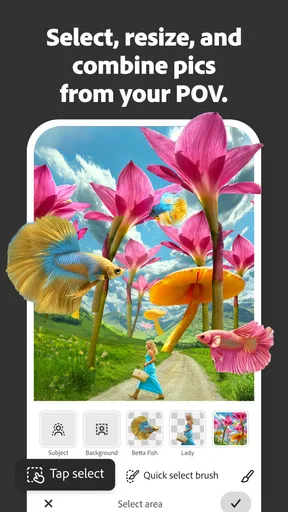
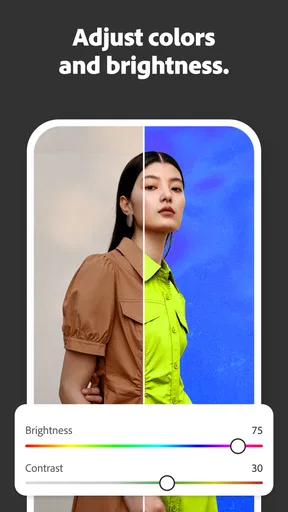
If you’re someone who loves features, then buckle up! This app is packed with them. From basic adjustments like brightness and contrast to more advanced tools like layers and masking, Adobe Photoshop: Photo Editor has you covered. One of my favorite features is the ability to work with layers, allowing you to make complex edits without messing up your original image. It’s like having a safety net for your creativity.
Worth Reading Before You Choose

EA SPORTS FC Mobile 26 Is a Bigger Football Game, but It Takes Time

Flipboard Shows What News Apps Must Do Beyond the Feed

Switching to Android Auto Means Rethinking Your Driving Routine

Google Calendar Makes a Crowded Week Easier to Manage

Ludo King Makes the Most of the Minutes Between Plans

Baby Panda World Brings Quick Play to Modern Phones, but Its Game Library Feels Busy
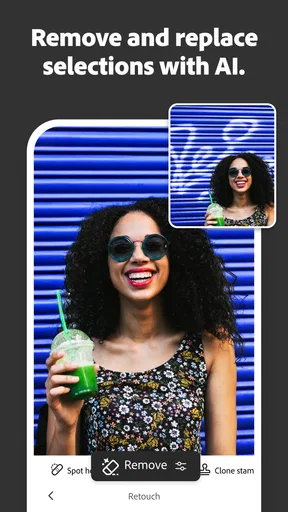
The app also offers a wide range of filters and effects that can give your photos that extra pop. Whether you want a vintage look or something more modern, there’s a filter for every vibe. Plus, the retouch and heal tools are a game-changer for fixing little imperfections or enhancing details.
Layers are especially useful when you’re combining elements that may need separate adjustments. I’d keep a background, a subject, and decorative additions on their own rather than flattening everything too early. That makes it easier to revise one part when the composition feels crowded. Masking can also help blend an edit more gently: instead of applying a strong change across the whole picture, use a restrained adjustment on the area that needs it and check the transition around its edges.
For a realistic everyday example, imagine taking a bright café photo that includes a distracting object near the edge. I’d first crop to improve the framing, then use a healing tool only if removing the object won’t damage a recognizable pattern such as tile, lettering, or a table edge. After that, I’d make a modest color correction and compare it with the original. That order matters: aggressive retouching can draw more attention than the distraction did.
There is a trade-off to this flexibility. A phone is convenient for selecting and correcting, but precise masking and detailed retouching can be fiddly on a small touchscreen. I’d use the app for a social post, a personal collage, or a quick cleanup; for a large batch of photographs or pixel-level work, a desktop editor with a bigger screen and more comfortable controls is usually the better fit.
Creative Cloud Integration
Another big win for this app is its seamless integration with Adobe Creative Cloud. If you’re already in the Adobe ecosystem, this is a huge plus. You can start a project on your desktop and continue editing on your phone or tablet. This cross-device flexibility is a lifesaver, especially for those of us who are always on the go.
Syncing your work is a breeze, and it’s nice not to worry about losing your edits or having to start from scratch. It really makes the whole experience feel cohesive and connected.
This is most valuable when a project genuinely moves between devices: I might make a rough selection while away from my desk, then revisit the composition later on a larger screen. If you mainly edit on one phone and don’t use Adobe’s other tools, the ecosystem connection is less of a reason to choose this app. I’d also make a habit of checking that the version of a project I intend to continue is the one available on the device I’m using, rather than assuming every handoff will match my workflow automatically.
Performance and Usability
Performance-wise, the app runs smoothly even on older devices. I was impressed with how quickly edits were applied and how responsive the app felt overall. No one likes waiting around for filters to load, and thankfully, that’s not an issue here.
Usability is another strong point. The app is designed to cater to both beginners and experts, with simple tools for quick fixes and more advanced options for those who want to dive deeper. The tutorials and guided edits are also a nice touch for those who are still learning the ropes.
A helpful habit is to make a quick version of an edit before spending time on detail. I’d crop and correct the overall look first, then zoom in for retouching and inspect the result at normal viewing size before sharing. This catches two common mobile-editing problems: spending time polishing an area no one will notice, and pushing a filter so far that the photo no longer feels natural.
Compared with a typical phone gallery editor, Photoshop gives me more room to combine elements and make selective changes; the built-in editor is often faster when all I need is a crop, rotation, or simple brightness adjustment. Compared with dedicated desktop software, the mobile experience wins on convenience but loses some comfort and precision for long sessions. I wouldn’t choose it for managing a large archive or applying the same carefully calibrated treatment to hundreds of images.
The app is free to download, but it includes in-app purchases ranging from $4.99 to $499.99 per item. That wide span makes it sensible to check what a particular paid option includes before committing. If your needs are limited to occasional edits, start with the tools available without paying and decide from your own workflow whether anything extra is worth it. People who want a straightforward, no-learning-curve editor may be happier with a simpler gallery tool; people who want layered creative work are more likely to appreciate the extra depth here.
What has changed, and what I’d watch
The app’s release date is October 7, 2025, and version 1.5.0.2275 is its current version. Those are useful reference points for understanding the product’s present state, but they don’t by themselves establish what changed between releases. I wouldn’t infer a new tool or a major redesign from a version number alone. For existing users, the practical approach is to judge the current build by whether it handles the edits they rely on and to review any update details when they appear.
If you already use it, the most important question is whether your usual workflow remains comfortable: can you make the corrections you need on a phone, and does moving work between devices genuinely save you time? If you’re new, try a small, low-stakes edit before building a more complicated project. Keep the original image intact, make restrained changes, and check the result at the size you plan to share. Those simple checks reveal more than a feature checklist about whether this editor belongs in your routine.
Final Thoughts
In conclusion, Adobe Photoshop: Photo Editor is a powerful tool that lives up to the Photoshop name. It’s versatile, user-friendly, and packed with features that cater to all levels of creativity. Whether you’re editing photos for social media or working on a professional project, this app has the tools you need to create stunning images.
So, if you're looking for an app that combines ease of use with powerful editing capabilities, give this one a shot. You might just find that it becomes an essential part of your digital toolkit. Happy editing!
My recommendation is strongest for curious phone photographers who want to go beyond presets, especially if they already use Adobe tools or enjoy building images in layers. I’d skip it if your priority is the fastest possible one-tap fix, if you regularly need meticulous desktop-level control, or if you don’t want to sort through optional purchases. For everyone else, it’s worth trying on a photo you can afford to experiment with; a few careful edits will quickly show whether its balance of creative control and mobile convenience works for you.
Pros
- Extensive editing tools for professionals.
- Supports high-resolution image formats.
- Seamless integration with Adobe Cloud.
- Regular updates with new features.
- User-friendly interface for quick edits.
Cons
- High subscription cost for full features.
- Steep learning curve for beginners.
- Heavy app size may lag on older devices.
- Limited features in free version.
- Requires constant internet for cloud access.
FAQs for Adobe Photoshop: Photo Editor
What are the main features of Adobe Photoshop: Photo Editor?
Adobe Photoshop: Photo Editor offers a range of powerful tools for editing and enhancing photos on mobile devices. Key features include advanced filters, customizable brushes, layer editing, and AI-powered enhancements. It also provides integration with Adobe Creative Cloud, enabling seamless workflow across devices. Additionally, the app supports RAW file editing and offers a variety of tutorials for beginners.
Is Adobe Photoshop: Photo Editor suitable for beginners?
Yes, Adobe Photoshop: Photo Editor is designed to be user-friendly for both beginners and experienced users. It offers guided tutorials and an intuitive interface that simplifies complex editing tasks. The app provides easy access to basic features, while still allowing advanced users to delve into more intricate options as they become more comfortable with the tools.
What are the system requirements for Adobe Photoshop: Photo Editor?
Adobe Photoshop: Photo Editor is available for both Android and iOS devices. For optimal performance, it requires a device with a minimum of 4GB RAM and a compatible operating system—Android 8.0 or higher, or iOS 13.0 or later. A stable internet connection is recommended for cloud features and updates.
Does Adobe Photoshop: Photo Editor offer cloud storage?
Yes, Adobe Photoshop: Photo Editor is integrated with Adobe Creative Cloud, which allows users to store and access their projects online. This feature enables users to start editing on one device and continue seamlessly on another. Cloud storage also ensures that your projects are backed up and easily accessible from anywhere.
Is there a cost associated with using Adobe Photoshop: Photo Editor?
Adobe Photoshop: Photo Editor offers a free version with basic features, but to unlock its full potential, a subscription is required. The subscription provides access to premium features and additional cloud storage. Adobe offers different pricing plans, including monthly and yearly options, to cater to various needs and budgets.


